Arts View

Jan 2026 – Mar 2026

Matty Monethi

Matty Monethi

Maseru, Lesotho

Originally from Maseru in Lesotho where she is again based, part of Matty’s upbringing was spent in Ethiopia and South Africa respectively. She obtained a BA in Fine Arts at the Wits School of Arts, University of the Witwatersrand, Johannesburg, South Africa and also studied for one year in the UK at the University of Hertfordshire.

The youngest of 4 children, Matty juggles her fine art practice with her role as co-founder and arts director at ‘Mokha
Arts Animation Studios’, an animation studio she set up with a friend.

Matty uses painting, printmaking and text to explore the personal dimensions of migration and memory. With a keen sense of her own place in broader historical contexts in Africa, she scrutinises her connections with her adopted countries, cultures and close relationships.

Matty draws on memories of her own experiences, as well as family photographs from her childhood, to create emblematic pictorial scenes punctuated by empty space and text. Her evocative representational works address evolving selfhood, the depiction of the past, and the relationship between personal archives and nostalgia.
AGN – You spent a period working as a chef and baker in the family business while maintaining your art practice and co-founding an animation studio. Is there anything from your role as a chef and baker that you were able to transfer to your artistic endeavours?

MM: Yes, I’d say discipline and planning ahead. Having a recipe helps a lot, I’ve transferred that into my artistic endeavours, which isn’t something new to me but it is something I’d forgotten to utilise when it comes to my work.

AGN – What inspired you to co-found ‘MokhaArts Animation Studios’, and how does animation differ from or complement your fine art practice?

MM: My business partner, Thato Mokhali and I met in late 2023 while working on a stop motion project. He had been hired as animation department facilitator while I was hired as art department facilitator. During that week of working together he pitched the idea of starting an animation studio, he felt we could work well together.

I’ve always been a fan of animation, from a consumer stand point and I appreciate it as an art form. I thought why not? Let’s try it.

The animation and the fine art practice are complimentary when it comes to the foundational aspects, there’s drawing and painting. The difference is the tech part of it, which isn’t something I use in my fine practice beyond occasional use of Photoshop.

The biggest difference is that animation requires teamwork, whereas in my practice I can work alone. Animation also takes an insane amount of time to complete, you can spend hours on something only for it to be 5 seconds when rendered.


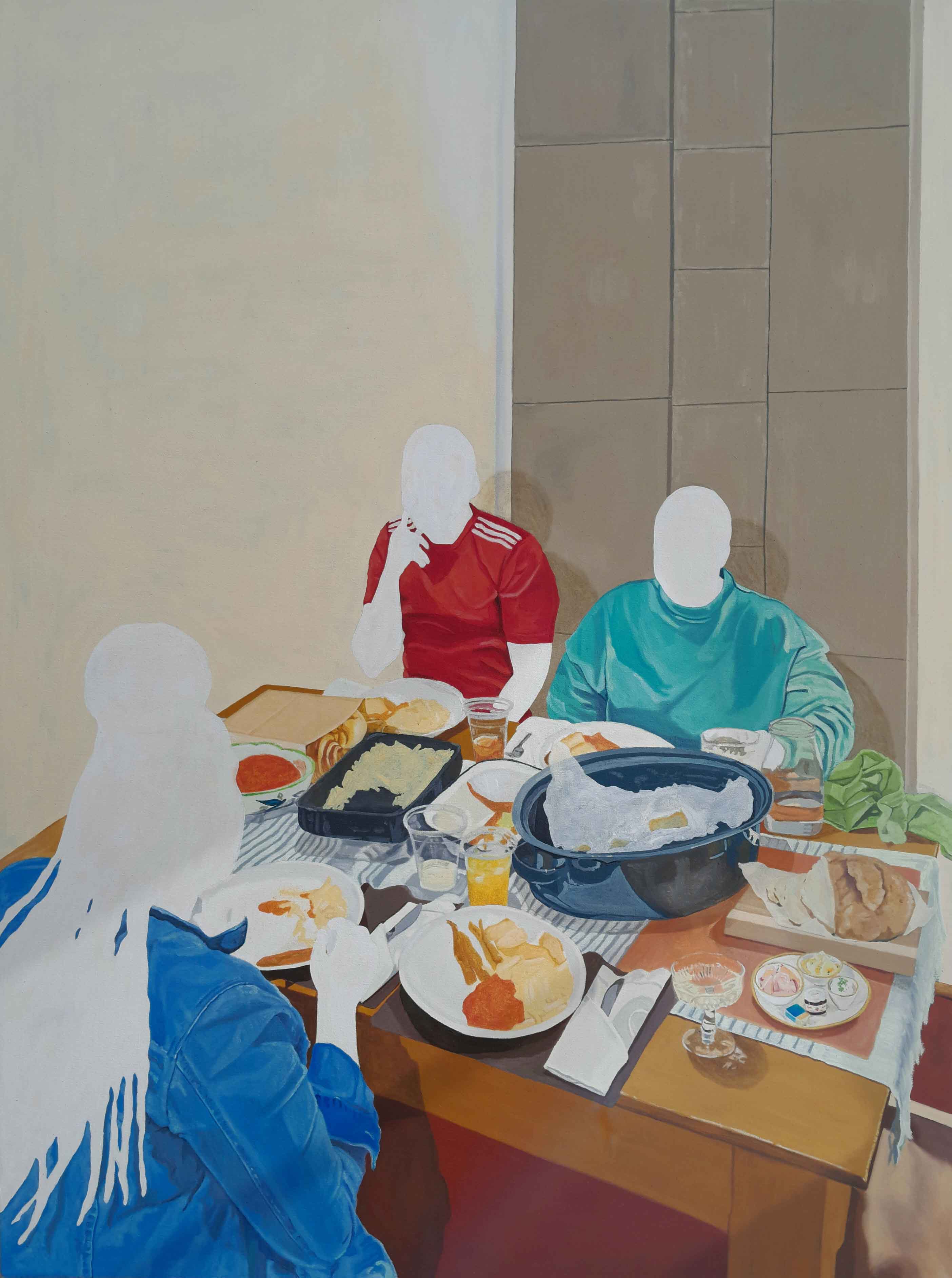
Dinner_oil on canvas_125.5x95.5cm_2023

AGN – It has been over a year since ‘MokhaArts Animation Studios’ was founded. If you knew at inception what you know now, what is the main thing you would do differently from the get-go?

MM: I would bring skilled labour on board from the beginning, have a core team of 5 that will push from the start.

AGN – As a child you drew a lot and also sculpted with clay and made figures with wire. How did the visual arts come to be your primary mode of expression?

MM: It just made sense. Like you said, I’ve drawn and sculpted since I was young, art was one of my favourite subjects at school. I process information visually. Once I realised I can pursue visual arts as a career, the decision was easy.

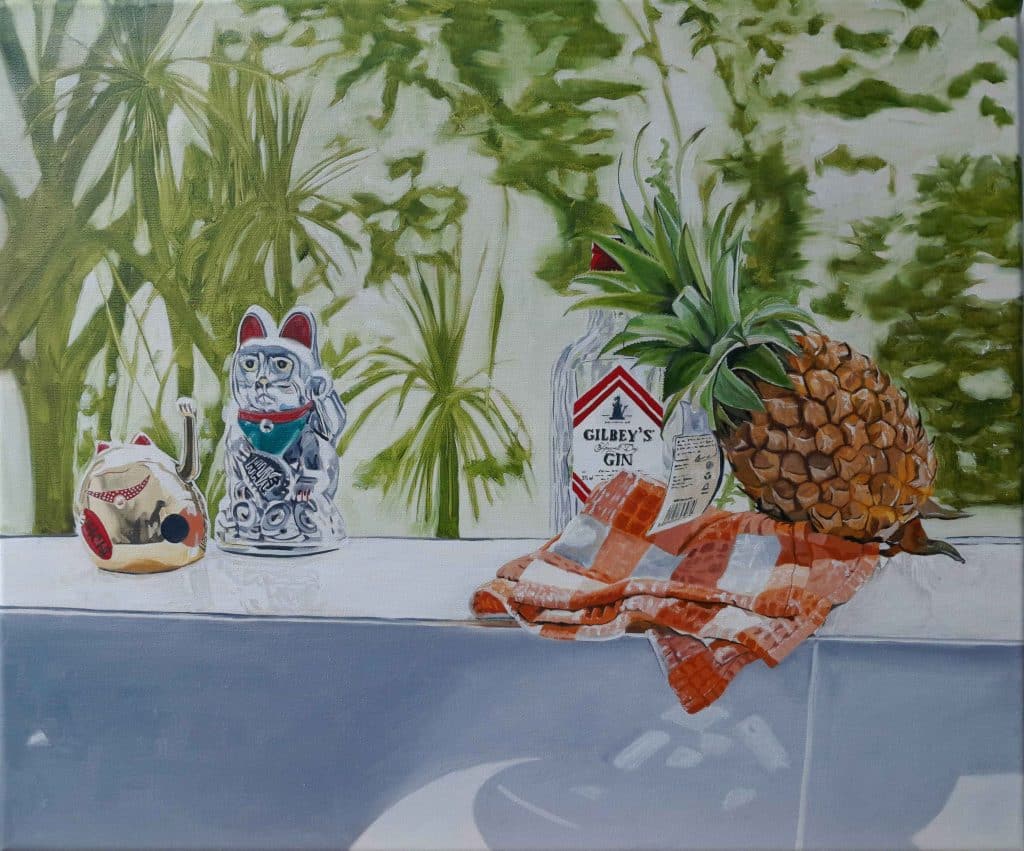
A Joburg Still Life_oil on canvas_60x50cm_2023

AGN – What insights can you share about your creative process?

MM: The creation of my work often starts with a photograph or memory, then comes the writing and sketching, and then the painting. Other times it starts with an idea, thought or feeling, I then think back to a time in my life that best represents that idea and select images from that time to work from.

Writing is central to my practice, it happens before, during and after I create my paintings. I write the facts: who, when, what, where. Then I’ll try to recall the events of that day, what led to that moment, what was the atmosphere, what was I thinking and feeling in that moment, what were the people in the photograph saying and doing. At the same time I also write about my present response to the image.

In this process there are details I am confident in, there are blank spaces, falsehoods and imaginations that come with memory because it’s always shifting. I paint with the intention of presenting these findings. In my work there is space for fact and fiction, for presences and absences.

AGN – How did growing up between Lesotho, Ethiopia, and South Africa shape your sense of identity and belonging?

MM: My upbringing has made me terribly independent. I’m open to change, I don’t expect permanence from people and situations.

I have a love for the countries that have made me who I am, but I don’t have a sense of patriotism to them. My loyalties lie with the people who are/were in my life. I feel that I belong when I’m within my small communities.

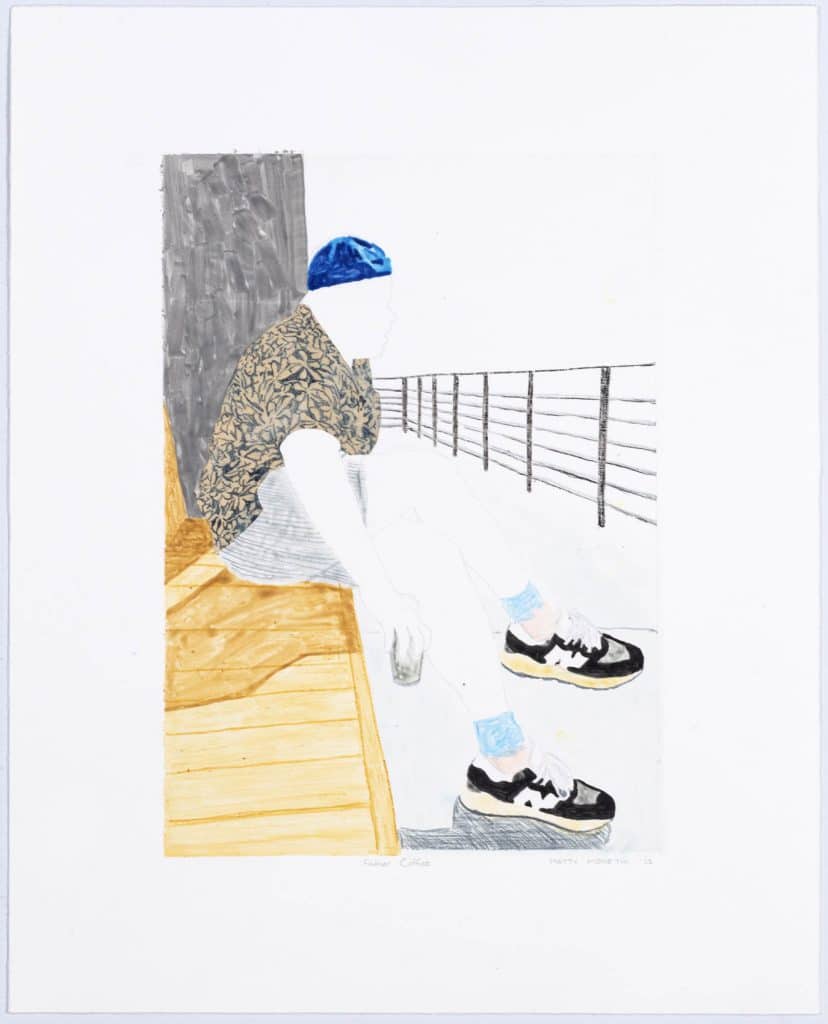
Monethi, M., Father Coffee, 2022., 43 x 34 cm

AGN – In what way would you like your work to contribute to conversations about migration, memory, and selfhood from an African context?

MM: I hope my work reminds people of what we carry with us and what we leave behind when we move. That you can exist in both the present and the future, time is not linear. Lastly, it’s okay to have a fractured identity, it gives space for an intentional search for self and belonging.

With today’s political climate and attitudes towards migrants I want my work to contribute towards conversations that speak to our humanity.

AGN – How do you navigate the emotional distance between nostalgia and critical reflection in your art?

MM: I believe the nature of the relationship between art and viewer helps with that. When I am creating my work it is obviously sentimental and I have all these experiences that make the moments I paint special and important to me.

I don’t create work with the intention or hope that people will get everything behind my work. My intention is to create work as honestly as I can and hope that someone somewhere can find something in my work that speaks to their own experiences.

As soon as my work leaves my studio and enters the public sphere, its reading is out of my hands. It has its own identity and can be read in ways that are different or in opposition to what I intended. It is objective until a viewer engages with it.

AGN – In what way do you decide what to leave unsaid or “empty” in your pieces, especially through space and text?

MM: One way I come to the decision is based on what information is needed to communicate what I’m trying to with a particular painting, that negative space creates a focal point. It’s not necessary to paint all details to effectively communicate an idea. The other way is that empty space is how I represent the uncertain nature of memory and remembering, the empty space is for forgetting and fiction.

AGN – If there was one thing you could change at the drop of a hat to enhance the arts scene in Lesotho, what would it be?

MM: I would have a national arts council in the country. We need an organisation whose sole purpose is the promotion and development of the arts.

AGN – Which artist has influenced you the most and what is it about them and/or their work that has resonated so deeply with you?

MM: That artist is Dineo Seshee Bopape. Meeting her has changed me as a person and an artist. I have a deep respect and love for her and her work. I admire the way she approaches her practice, it’s with compassion and respect for those she works with, and the materials and histories she engages with. She’s a consummate professional. Working for her showed me what’s possible in this field.

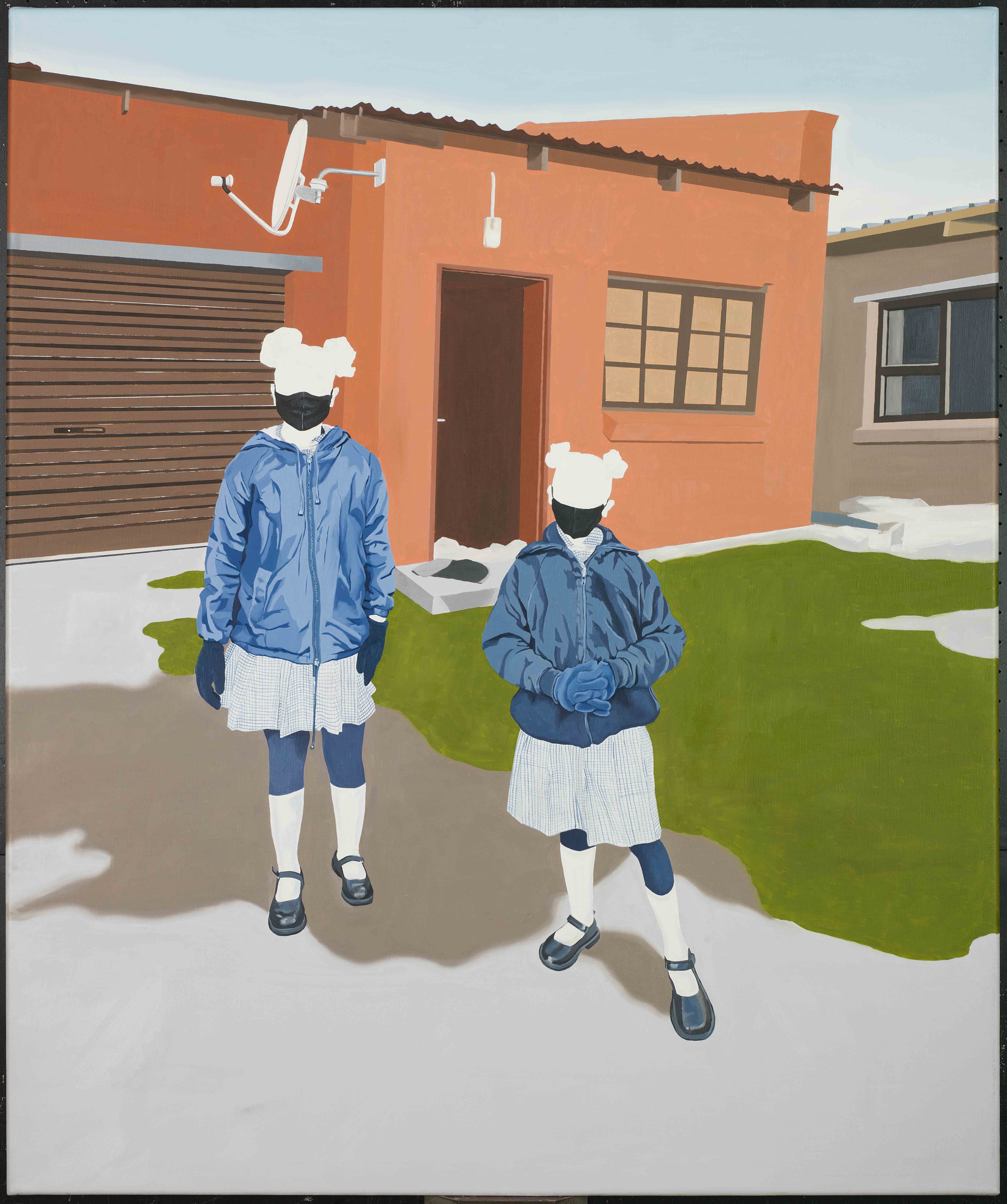
Winter Morning_oil on canvas_120x100cm_2023

AGN – Looking to the future, what would you like to achieve as an artist within the next ten years?

MM: I would like to exhibit in one or two of the big art fairs in the world. I would like to go on residencies within Africa. I would like to have printmaking as a more prominent part of my artistic practice.

AGN – Aside from art, what other interests do you have?

MM: I love cooking and baking. I’ve been a gamer and bookworm since I was a kid.

AGN – How would those closest to you describe you?

MM: I think they would say that I am quiet yet talkative, kind and level headed. They would also say I work too much and need to pump the brakes sometimes.

AGN – Apart from your professional achievements, what are you most proud of?

MM: I am really proud of the relationships I have in my life, my growing connection to my home country and my personal growth as a person.

AGN – Is there anything you would like to add?

MM: I would like to build spaces that focus on community building, for artists and the general public. To address a dire need for spaces that meet our needs and concerns in Lesotho.

Previous ‘Arts View’ features are available here; archive

Writer:
Ri Iyovwaye

Editor:
Ri Iyovwaye

© 2026 All rights reserved

on behalf of African Global Networks (AGN) – Jan 2026